Field-grounded systems thinking. How physical thermodynamics, subterranean biology, and distributed networks dictate the survival of trees and landscapes.
01
Symptoms in the Canopy Are Caused by Pathology in the Soil.
Over 90% of tree decline in urban and suburban landscapes traces directly to root zone distress: severe mechanical soil compaction, buried root flares, lack of pore space for gas exchange, or damaged mycorrhizal relationships. If roots cannot respire, the tree cannot metabolize nutrients regardless of how much chemical fertilizer is poured around it.
02
The Critical Root Zone: Oxygen, Water, and Carbon Porosity.
Roots require oxygen just as intensely as they require moisture. In healthy native soils, the upper twelve to eighteen inches are riddled with macro-pores created by earthworms, decomposing organic matter, and fungal hyphae. This structure allows atmospheric oxygen to diffuse downward while toxic carbon dioxide diffuses upward.
When heavy machinery, pedestrian traffic, or artificial grade changes compress those pores, oxygen levels plummet. Anaerobic conditions trigger root rot pathogens, starve fine feeder roots, and lock up mineral uptake. Restoring physical porosity pneumatically with precision AirSpade excavation is the fastest way to re-oxygenate that living interface without shredding roots.
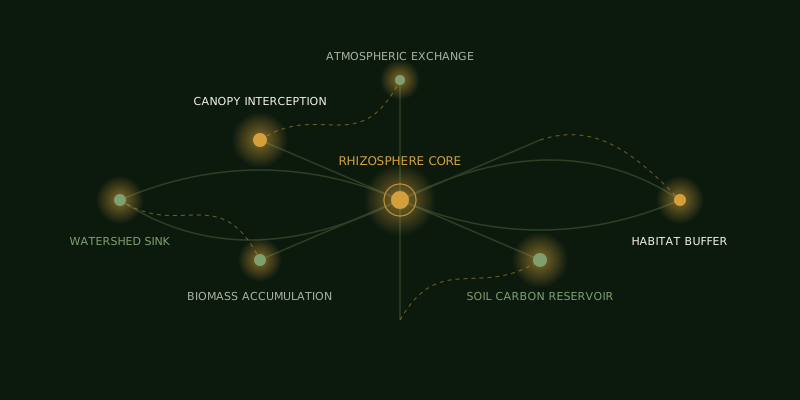
The Network Architecture: A tree is not an isolated pole on a lawn. It is a biological node connected to canopy moisture interception, subterranean mycelial routing, and regional groundwater recharge.
03
Nature Optimizes for Survivability, Not Unchecked Speed.
Modern agriculture and commercial landscaping obsess over rapid growth rates: pumping high-nitrogen synthetic salts to push lush green canopies in record time. But rapid vertical growth comes with a severe structural penalty: thin cell walls, compromised lignin, depleted carbon reserves, and heightened vulnerability to fungal disease and drought.
Biological systems in equilibrium optimize for structural survivability within strict thermodynamic constraints. A tree that builds dense wood, deep mycorrhizal associations, and expansive root flares can withstand hundred-year droughts and severe Central Texas freezes. We do not force artificial growth. We rebuild the subterranean conditions that allow the tree to regulate itself.
04
The Mycelium: Earth's Oldest Open-Source Routing Network.
The fungal hyphae threading beneath our boots execute decentralized resource distribution across entire forests without a central processor. When a shaded understory sapling needs carbon, or a mature canopy oak signals insect stress, the mycelial matrix routes moisture, minerals, and defense enzymes along biochemical gradients.
This is the oldest, most reliable open-source network protocol on earth. By inoculating decompacted soils with native mycorrhizae and high-porosity biochar, we reconnect isolated trees back into this distributed biological grid.
05
Full-Property Thinking: Fix the Network, Heal the Node.
An individual tree cannot be understood or permanently protected in isolation from the parcel it occupies. The slope of the land, the runoff velocity from hardscapes, the diversity of the understory, and the depth of the soil sponge all dictate whether roots thrive or wither.
When we design whole-property ecological interventions: slowing stormwater, creating passive infiltration swales, establishing native biological guilds, and eliminating toxic turf chemicals: the entire property transitions into an enduring sanctuary. When the network is restored, the individual trees recover naturally.
Ready to apply these principles to your land?
Consultations available across Central Texas for root zone diagnostics, soil invigoration, and full-property ecological design.